MENA Market Insights
The Influencer Credibility Crisis in Lebanon: What Brands Should Do Instead
The Influencer Credibility Crisis in Lebanon: What Brands Should Do Instead
Byblos HorizonMohamad Haidar
Founder of Byblos Horizon
Published January 14, 2026 · 8 min read · Updated September 17, 2026
Am I the only one who's reached peak food-blogger fatigue?
Every restaurant is "a hidden gem." Every burger is "the best in Lebanon." Every skincare product changed someone's life by Thursday. And audiences, who are far smarter than the industry gives them credit for, have quietly stopped believing any of it.
I've managed over $20M in ad and influencer spend across my career, so let me be clear from the start: this is not an anti-influencer article. Influencer marketing works. What's broken in Lebanon is not the channel. It is the credibility economics underneath it. And brands that understand this can get outsized results from a channel everyone else is busy devaluing.
How we got here
Paid praise became indistinguishable from opinion. Some marketing influencers will praise a product, a campaign, a billboard, or a brand they clearly know is weak, because they're paid to. When audiences catch this (and they always do, eventually), the influencer's credibility doesn't just drop for that one post. Every past and future recommendation gets repriced to zero. Marketers who sell their judgment aren't just hurting brands; they're making the entire industry look bad.
The formula ate the authenticity. Take the mom-influencer economy. I'll say something that might get me backlash: a lot of brands don't work with mom influencers because they think the content is genius. They work with them because it sells to the masses, it's easy to consume, it shows life, kids, home, routine. That's a legitimate reason! Relatability is real distribution. But when every video follows the same script, same tone, same kitchen, same forced product moment, relatability collapses into formula, and formula is invisible.
The language mismatch. A special category of self-sabotage: Lebanese products, Lebanese audiences, Lebanese comment sections, and somehow the ad is delivered in strained English that sounds like a rejected Netflix audition. Not every brand needs English content. Speaking to your audience in a register they don't use for that product is a subtle but constant signal that the content is performance, not recommendation.
Volume killed scarcity. When an influencer recommends something weekly, each recommendation carries meaning. When they recommend something daily, the recommendation is the product they sell, and the audience knows it.
The repricing of trust
Here's the economic way to see it. An influencer's value to a brand is exactly one thing: transferred trust. The audience trusts the person; the person endorses your product; some of that trust transfers.
Every undisclosed ad, every praised-but-weak product, every formulaic integration withdraws from the trust account. Lebanese audiences have watched years of withdrawals. The result is a market where follower counts stayed high while trust-per-follower quietly collapsed, meaning brands are paying prices set by reach while receiving value determined by credibility.
That's the arbitrage opportunity: reach is overpriced, credibility is underpriced. Buy credibility.
What smart brands should do instead
Choose critics over cheerleaders. The most valuable endorsement in Lebanon today comes from someone the audience has seen be negative. When I criticized a coffee brand's billboard campaign publicly, and months later said their new campaign convinced me to actually try the product, that praise meant something, precisely because the criticism had been free. Look for voices with a track record of independent judgment. Their "yes" is worth fifty contractual yeses.
Brief for opinion, not for script. The moment you hand an influencer exact words, you've bought an ad read, and the audience hears it instantly. Give creators the product, real information, honest access, and freedom to have a genuine reaction. Yes, this risks lukewarm takes. That risk is what makes the positive ones valuable.
Match the messenger to the product, not to the follower count. A 15K-follower fitness coach whose audience actually trains will outsell a 500K lifestyle account for a supplement brand, at a tenth of the price. Relevance and trust density beat reach in almost every category, and especially in a small, socially dense market like Lebanon where word-of-mouth verification is one voice note away.
Respect the audience's language. If your product lives in Lebanese homes, let the content speak the way those homes speak: Arabic, French, English, or the natural mix. Authenticity in register is as important as authenticity in opinion.
Measure influence, not impressions. Coupon codes, dedicated landing pages, post-purchase "how did you hear about us" surveys, branded search lift in the campaign window. The influencers worth rebooking are the ones whose audiences act. You'll be surprised how weakly that correlates with follower count, and how strongly it correlates with credibility.
The influencer side of the bargain
A word to the creators, because this crisis is theirs to solve too: your credibility is your entire asset. Every brand deal is priced against it. Sell it cheaply, praise weak products, hide disclosures, run formulas, and you're liquidating the business while collecting its revenue. The creators who will still have careers in five years are the ones treating their audience's trust as the balance sheet it is.
Marketing is supposed to be built on insight and honesty. The moment we normalize paid dishonesty, we all inherit the fatigue.
The bigger picture for MENA brands
This credibility repricing is happening across the region, not just Lebanon, but Lebanon, as usual, is early. Small market, dense social graph, economically pressured consumers who can't afford bad purchases: trust here gets verified and falsified faster than anywhere in MENA.
Which makes it the perfect laboratory. Brands that learn to buy credibility instead of reach in Lebanon will run the same playbook profitably in the GCC, where budgets are bigger, the same fatigue is arriving on delay, and most competitors are still paying premium prices for devalued attention.
Frequently asked questions
Is influencer marketing still effective in Lebanon?
Yes, but the returns have shifted from reach-based to credibility-based. Formulaic mega-influencer campaigns underperform their pricing, while credible niche voices with engaged audiences outperform. The channel works; the old buying criteria don't.
How do I choose the right influencer for my brand?
Look at trust signals, not follower counts: Do they show independent judgment (including criticism)? Does their audience match your actual buyer? Do comments show real relationships? Does their content language match how your customers speak? Then verify with performance tracking, not screenshots of reach.
What are micro-influencers and do they work in the Lebanese market?
Micro-influencers (roughly 5K 50K followers) typically have higher trust density, more genuine engagement per follower. In a socially dense market like Lebanon, where recommendations get verified through personal networks, credible micro-voices often outconvert celebrities at a fraction of the cost.
How should brands measure influencer ROI?
Attributable actions: unique discount codes, dedicated landing pages, post-purchase attribution surveys, and branded search lift during campaign windows. If a creator can't move any measurable number, you bought visibility, not influence.
Does Byblos Horizon manage influencer campaigns?
Yes, influencer strategy is part of our growth work, with over $20M in ad and influencer spend managed across the founder's career and $1.5M+ managed by the studio. We build credibility-first campaigns: creator selection based on trust data, opinion-led briefs, and full performance measurement. Book a consultation to discuss your market.
Building a launch that needs believable voices? Talk to us we'll tell you honestly which influencers are worth your budget.
Practical next steps
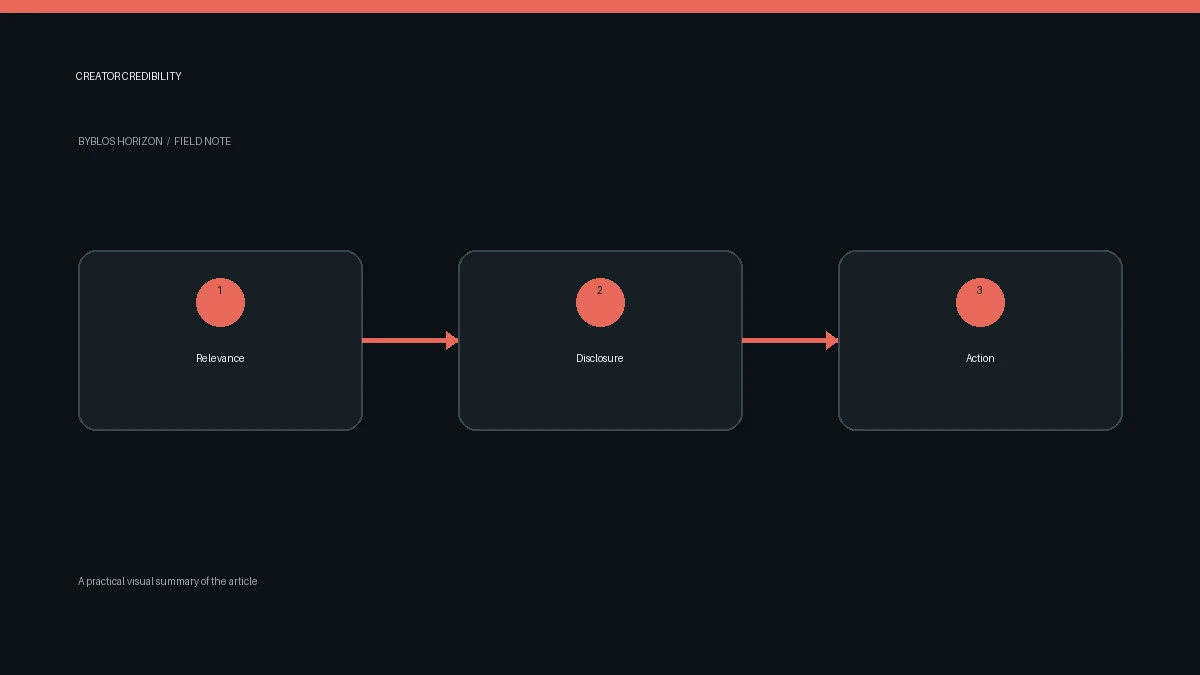
Build creator activity around credibility and commercial relevance:
- review the wider Lebanon marketing context.
- measure creator traffic against customer actions.
- compare reach with commercially relevant attention.
Sources
- The FTC explains how creators should disclose material relationships with brands. FTC influencer disclosure guidance.
- Google documents how important customer actions can be measured as conversions. Google Analytics conversion documentation.
Related services
Related articles