AI Marketing
WhatsApp Automation in Lebanon: Why Most Brands Get It Wrong
WhatsApp Automation in Lebanon: Why Most Brands Get It Wrong
Byblos HorizonMohamad Haidar
Founder of Byblos Horizon
Published March 10, 2026 · 8 min read · Updated September 17, 2026
A restaurant recently sent me a WhatsApp message that started with "Hi Nehmet Haydar."
My name is Mohamad. That's not close. It's probably the fifth time a restaurant's automation has gotten my name, my family name, or even my gender wrong, from businesses that have my number, my order history, and every opportunity to know exactly who I am.
Around the same time, one of Lebanon's largest banks sent me an automated WhatsApp broadcast about service updates. I decided to test the support flow. I replied. The system redirected me to another WhatsApp number. I sent "Hi." Then, nothing. For days.
And a major regional fashion retailer reached out to me through genuinely well-built WhatsApp infrastructure. I tested it with a simple buying question. The infrastructure was there. The intelligence wasn't.
Three different industries. Three different budgets. The exact same failure. Everyone in Lebanon is buying WhatsApp automation. Almost nobody is building WhatsApp intelligence.
Why WhatsApp matters more here than almost anywhere
Let's be clear about the stakes. In Lebanon and across MENA, WhatsApp isn't a channel, it's the channel. It's where families organize, where businesses close deals, where customer service actually happens. Penetration is near-total, and attention on WhatsApp is higher than email, SMS, and app notifications combined.
For businesses, that makes the WhatsApp Business API the single most valuable communication asset in the region: order confirmations that get read, delivery updates that reduce COD refusals, reorder flows that drive retention without ad spend, support that meets customers where they already live.
Which is exactly why getting it wrong is so expensive. A bad email goes unread. A bad WhatsApp message lands in the same inbox as someone's family, and the intrusion is felt. You're not wasting an impression; you're burning trust in the most personal channel that exists.
The three levels of WhatsApp maturity
After testing dozens of Lebanese and regional implementations, I map every brand onto three levels.
Level 1 The broadcast cannon. The business bought API access and uses it to blast promotions. No segmentation, no personalization (or worse, broken personalization that calls me Nehmet), no real reply handling. This is SMS marketing wearing a WhatsApp costume, and it actively trains customers to block the number. The block, by the way, is a data point most brands never see: WhatsApp is where customers punish you silently.
Level 2 The infrastructure without a brain. This is where the serious money currently sits. Proper API setup, chatbot menus, automated flows, the plumbing is genuinely good. But ask it a real buying question ("Do you have this in medium in the Beirut store?") and the whole thing collapses into "An agent will contact you shortly." The infrastructure writes checks the intelligence can't cash. Customers learn quickly that the fancy bot is just a slower path to a human, and stop engaging.
Level 3 The intelligence layer. The rare implementations where automation actually knows things: your order history, live inventory, delivery status, your actual name. Where an AI layer can answer real questions, complete real transactions, and hand off to humans with full context at the right moment. This is conversational commerce, and in Lebanon, it's still nearly empty territory.
What the intelligence layer actually requires
Getting to Level 3 isn't about buying a better chatbot. It's a systems design problem, the same discipline as any production AI build.
Clean, connected data. The "Hi Nehmet" problem is a data problem before it's an AI problem. If your CRM, order system, and WhatsApp platform don't share a clean customer record, no AI can save you. Data hygiene is unglamorous, which is why nobody does it, which is why everybody's personalization is broken.
Real AI, properly constrained. Modern language models can handle natural customer conversations in Arabic, French, English and the Lebanese mix of all three in one sentence. But a production deployment needs the full architecture: the right model, grounding in your actual catalogue and policies (RAG), guardrails against invented answers, structured outputs into your order system, and continuous evaluation. A great prompt is not a system.
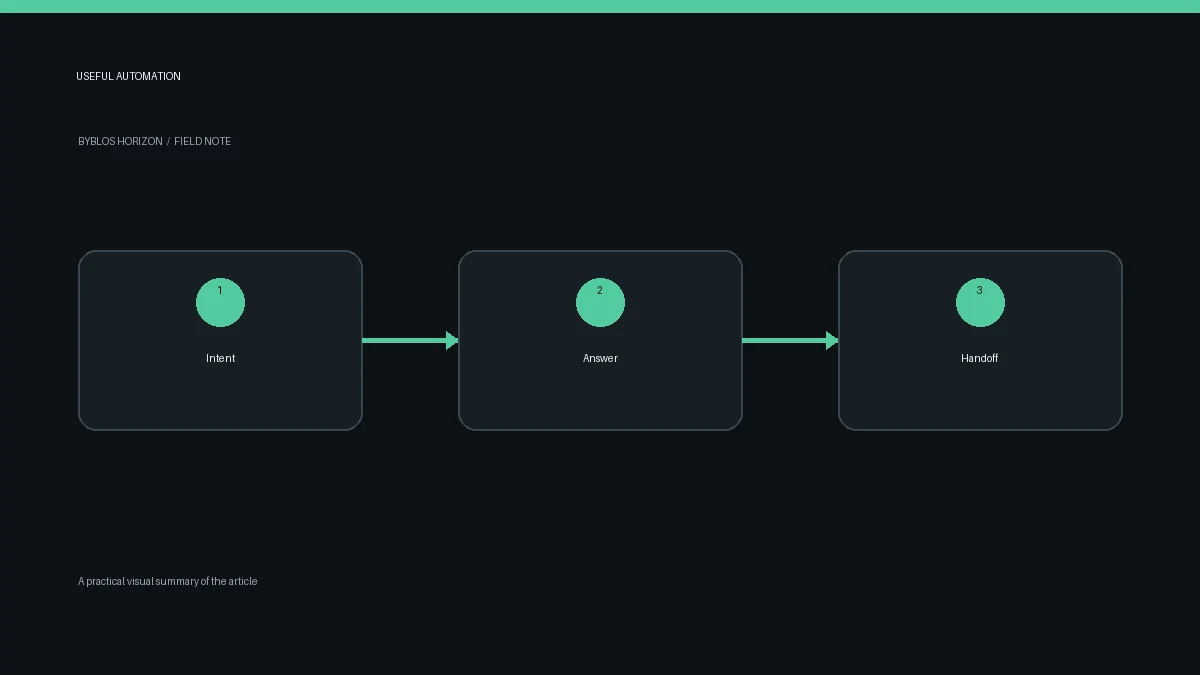
Designed escalation. The goal is not replacing humans; it's spending human attention where it matters. The handoff moment, with full conversation context transferred, not "please repeat your issue", is where most implementations fail hardest. An escalation that loses context is worse than no automation at all, because the customer has now explained their problem twice and been helped zero times.
Respect for the channel. Frequency caps, genuine opt-ins, value in every message. The brands that win WhatsApp long-term treat every broadcast as a withdrawal from a trust account with a very real balance.
The opportunity for Lebanese and GCC brands
Here's what makes this moment interesting: the regional gap between infrastructure adoption and intelligence adoption is enormous, and it won't stay open forever.
Every retailer, bank, and restaurant group in the region is currently at Level 1 or Level 2. The first brands in each category to reach Level 3 will own something powerful, a direct, personal, transactional channel with near-100% attention, while competitors are still getting customers' names wrong.
And unlike a website redesign or an ad campaign, this advantage compounds: every conversation makes the data richer, every resolved query trains better flows, every satisfied interaction deepens the channel's trust. WhatsApp intelligence is an asset you build once and defend forever.
The window is open. It just requires treating WhatsApp as a product, not a campaign.
Frequently asked questions
What is the WhatsApp Business API and do I need it?
The WhatsApp Business API lets businesses send automated messages, run support flows, and integrate WhatsApp with their systems at scale (unlike the free Business app, which is manual). If you handle meaningful order or support volume in Lebanon or the GCC, the API is the foundation, but it's only as good as the data and intelligence behind it.
Why do WhatsApp chatbots frustrate customers?
Because most are menu-driven scripts that can't answer real questions. Customers ask about stock, sizes, delivery timing, the bot offers a menu of things they didn't ask. Frustration comes from the gap between the conversational promise of the channel and the rigid script behind it.
Can AI chatbots handle Arabic and Lebanese dialect?
Modern language models handle Arabic, French, English, and mixed Lebanese usage well, far better than the keyword bots most businesses currently run. The challenge isn't language; it's grounding the AI in your real inventory, policies, and customer data so its fluent answers are also correct.
How does WhatsApp automation help e-commerce specifically?
Order confirmations and delivery updates reduce COD refusal rates, reorder flows drive repeat purchases without ad spend, abandoned-cart nudges recover lost sales, and support automation resolves pre-purchase objections in real time. It's the highest-leverage retention channel in the MENA market.
Does Byblos Horizon build WhatsApp automation systems?
Yes, as part of our AI marketing services, we design full conversational commerce systems: data foundation, AI intelligence layer, escalation design, and retention flows. Book a consultation to see what Level 3 looks like for your business.
Test your own WhatsApp flow today, message your business as a customer and count the seconds until something useful happens. Then talk to us.
Practical next steps
Design the message journey around customer need and consent:
- map useful WhatsApp journeys and handoffs.
- connect messaging with wider operational workflows.
- review the economics of WhatsApp automation.
Sources
- WhatsApp documents its platform for business messaging and customer conversations. WhatsApp Business Platform.
- WhatsApp publishes the rules businesses must follow when messaging customers. WhatsApp Business Messaging Policy.
- Google documents how important customer actions can be measured as conversions. Google Analytics conversion documentation.