 Byblos Horizon
MENA Market Insights
Four Coffees, Four Buying Motivations: One Day in Beirut
An everyday coffee run becomes a case study in consumer psychology, brand positioning, mental availability, perceived value and the halo effect. Four cups, one buyer, four different reasons.
Mohamad Haidar
Founder of Byblos Horizon
Published November 4, 2026 · 14 min read
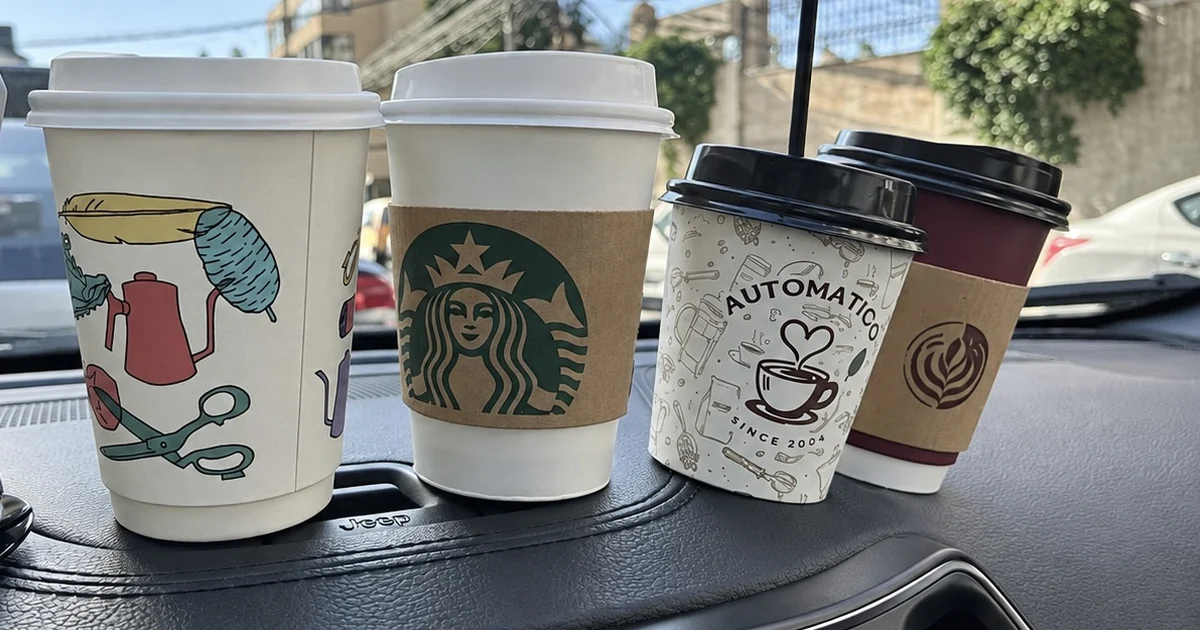
Four coffee cups, one consumer, four different decisions
Every day I start at 6:30 a.m. Between commuting, visiting clients, attending meetings and returning to my office, coffee is naturally part of the routine.
But one particular day in Beirut made me think about something more interesting than coffee. By the end of it I had four coffee cups sitting in my car. Their prices were $1.20, $5, $5 and $9. Twenty dollars and twenty cents of coffee in a single day.
Looking at those cups, I started asking myself a question. Why did I buy four coffees at four different price points, from four different businesses, in the same city, on the same day?
Was I comparing prices? Not really. Was I searching for the best coffee? Not always. Was I loyal to a particular brand? In one case, absolutely.
The interesting part is that each decision had a different motivation. As a marketer I saw a chance to examine my own behaviour through four connected ideas: situational convenience, mental and physical availability, brand loyalty, and perceived customer value.
These are not the only drivers of consumer behaviour, and four personal purchases are not market research. They are an illustration of how buying motivations change with context. And they raise a question worth asking. Are we positioning brands around what we want to say, or around what the consumer is actually trying to get done?
1. The $1.20 takeaway: situational convenience
My first coffee came from a small, ordinary takeaway shop. I was driving through traffic when I noticed it right beside me. I stopped, bought a $1.20 filter coffee, and kept driving.
The coffee was good. Nothing exceptional, but certainly acceptable for what I paid. Why that business? Because it was there. It was accessible, affordable, and it did not require me to change my route or spend extra time.
I did not compare it against competitors. I did not evaluate its brand identity or wonder where the beans came from. I had an immediate need and the business offered a convenient solution.
The psychology: situational needs and friction reduction
Consumer decisions are shaped by more than stable preferences. Circumstances, time pressure, location, effort and immediate need can change which product a person picks. In this case convenience mattered more than taste or reputation.
One way to read it is friction reduction: making a decision easier by lowering the time, effort or complexity involved. The product did not need to be better on every dimension. It needed to clear an acceptable quality threshold while costing almost nothing to buy.
What marketers should learn
If convenience is central to your value proposition, your marketing should reinforce accessibility and speed. But the operation has to support the promise. A takeaway shop that advertises quick service and consistently makes people wait is undermining the only reason they chose it.
The positioning could be as simple an association as this: good coffee, exactly when you need it, without slowing you down. The measures that matter would be service speed, purchase completion, repeat visits, and what customers say about convenience.
The point is not that every coffee shop should compete on convenience. It is that a business should know whether convenience is the reason its customers choose it.
2. The $5 Starbucks: mental and physical availability
Later that morning I was back near my office in Beirut Souks. There is a Starbucks about a minute away. I went, bought a $5 Americano, and returned to my car.
Was the coffee exceptional? Not particularly. It was good, familiar and predictable. But I was not looking for a new coffee experience. I knew the brand, I knew where it was, and I knew what to expect. That made the decision straightforward.
The psychology: mental availability and physical availability
Two established ideas explain this. Mental availability is how likely a brand is to come to mind in a buying situation, which depends on the associations a buyer has built between that brand and the occasion. Physical availability is how easily they can find and buy it. Both come out of the Ehrenberg-Bass Institute's work on how brands grow.
Starbucks had both. It was already familiar, and its location made the purchase easy. Which is why brand recognition and distribution should not be treated as separate priorities. A brand people remember but cannot reach loses the transaction. A brand that is reachable but never enters the consideration set struggles too.
What marketers should learn
A brand needs to be easy to think of and easy to buy. For a coffee chain that means strengthening the associations with the occasions it wants to win, and being accessible when those occasions arise. It shapes decisions about locations, signage, Google Maps visibility, opening hours and advertising.
The objective is not impressions. It is being recalled and bought when a relevant need occurs. Sometimes the advantage is not having the best coffee. It is being the brand people remember and can easily reach.
3. The $5 at a shop I have used for a decade: loyalty and habit
Later in the day I had to visit the American University of Beirut, in the Bliss Street area, and spent about four hours there. Heading back toward the office, I stopped at Latte Art.
This is where the behaviour gets interesting. I have been a customer there for roughly 12 to 14 years, going back to my university days. For more than a decade it has been one of my preferred local coffee shops.
I did not search Google Maps for alternatives. I did not compare prices. I did not need an advertisement to persuade me. I went back to a business I have known and trusted for years.
The psychology: loyalty, habit, and reduced perceived risk
Repeated positive experiences build familiarity and trust. Over time, buyers develop habits in which certain brands become the default. Part of that is decision efficiency: when you already know what to expect, there is less reason to spend time evaluating alternatives. Familiarity also lowers perceived risk.
Habit and genuine loyalty are not the same thing. Someone may buy repeatedly because a shop is conveniently placed rather than because they feel attached to it. Equally, a loyal customer may keep choosing a brand when alternatives are available. In my case the long history suggests a mix of familiarity, good experiences, trust and habit.
What marketers should learn
Many businesses spend heavily on acquisition and pay little attention to why existing customers come back. Retention takes more than an occasional promotion. It depends on consistently delivering the benefit customers have learned to expect.
The questions worth answering: what makes a first-time customer return, what reinforces trust across repeat visits, and what would make a loyal customer reconsider. The useful measures are repeat purchase rate, frequency, retention by cohort, and satisfaction. The objective is not to win a transaction. It is to make the next one more likely.
4. The $9 Colombian: perceived value and the whole experience
After work I went out again that evening, with someone who suggested a specialty coffee shop they liked. I agreed, but my motivation was different from earlier in the day. I was not after a quick takeaway. I wanted to sit somewhere, have a good coffee, and spend time with the person I was with.
I bought a $9 Colombian filter coffee. And I will admit something: it was probably the best-tasting coffee of the entire day. The taste genuinely impressed me.
Then I looked for somewhere to sit, and could not find anywhere. So instead of sitting and enjoying the evening as planned, we walked around for a while and eventually went back to the car.
That is an interesting contradiction. The most expensive coffee was the one I enjoyed most. It was not the purchase that delivered me the most value.
The psychology: perceived value, and expectation against experience
A fundamental distinction in marketing is between product quality and perceived value. Perceived quality is a judgment about how good the product is. Perceived value is the overall assessment of what you received against what you gave up, and what you give up includes money, time, effort and inconvenience. That distinction is central to Valarie Zeithaml's 1988 research on price, quality and value.
The $9 coffee delivered excellent taste. But the benefit I wanted from the visit included somewhere to sit and talk. Because I could not sit, my expectations for that occasion were not fully met.
Would I buy it again? If I specifically wanted an exceptional specialty coffee, possibly. If I wanted somewhere to sit with someone, I would probably choose differently.
This is not a claim that the shop is poor or its pricing unreasonable. A $9 coffee can be entirely justified for customers who value the beans, the preparation and the taste. The point is that value depends on the benefit being sought on that particular occasion.
What marketers should learn
Businesses often communicate product attributes without understanding how consumers judge the whole purchase. Premium pricing can be supported by quality, exclusivity, service, convenience or atmosphere. Not every customer values those equally.
The job is to identify what the target customer expects and whether the offering meets it. For a specialty coffee business that means knowing whether people come primarily for exceptional coffee, for takeaway convenience, for a social setting, or some combination. Premium quality does not automatically produce premium perceived value.
5. The halo effect, and what it is not
The halo effect is a cognitive bias in which a favourable impression of one characteristic shapes judgments about other characteristics. It matters in marketing because people evaluate businesses on limited information, and form expectations about things they have not yet experienced.
A beautifully designed cafe can lead someone to expect better coffee. An exceptional cup can lift their judgment of the whole business. A highly regarded brand can lead someone to assume its service, products and atmosphere will all be equally impressive. Sometimes those judgments are accurate. Sometimes they are an unwarranted transfer from one attribute to another.
How it connects to the evening
Before visiting, I had a positive recommendation from the person I was with, and the specialty framing raised my expectations of the coffee. After tasting it, I had a very positive impression of the product, and that impression could colour how I judge other parts of the brand.
But the visit also showed the limit. Enjoying the coffee did not change the fact that I could not find anywhere to sit, when sitting was part of the reason I went. A positive view of one attribute does not guarantee satisfaction across the whole experience.
There is a technical distinction worth keeping. My companion's recommendation is interpersonal influence and word of mouth. The $9 price may activate a price-quality heuristic, where price itself is read as a cue to quality. The halo effect specifically concerns transferring an impression about one characteristic onto judgments about others. These mechanisms interact, but they are not interchangeable. And because this is a personal observation rather than a controlled experiment, I cannot claim a halo effect was definitively responsible for my decision. It is a lens, not a finding.
The implication
A strong reputation in one area can lift expectations elsewhere, which helps a brand earn consideration, support premium positioning and encourage trial. But those expectations eventually meet the actual experience.
If you build a premium image around excellent coffee, people expect superior quality. If you build it around the whole cafe experience, people expect quality across product, service and environment. Those are different promises. The job is to know which expectations your positioning creates, and whether you can reliably deliver against them. Strong branding can shape perception. It cannot permanently substitute for the experience.
6. Jobs-to-Be-Done: why the same buyer bought four coffees
The four purchases can also be read through the Jobs-to-Be-Done framework, which focuses on what a customer is trying to accomplish in a given situation rather than only who the customer is.
My demographics, general preferences and identity did not change through the day. My immediate goals did.
| Purchase | Motivation | Marketing concept |
|---|---|---|
| $1.20 takeaway | Acceptable coffee, quickly, while stuck in traffic | Situational convenience |
| $5 Starbucks | Something familiar near the office | Mental and physical availability |
| $5 Latte Art | Return to a trusted, familiar brand | Loyalty and habitual purchasing |
| $9 specialty filter | Excellent coffee and time with someone | Perceived value and experience alignment |
This is why demographic segmentation alone may not explain buying behaviour. The same customer can sit in several segments at once when segmentation is built on needs or occasions. Behavioural segmentation should consider not only who buys, but when, why and under what circumstances.
One more distinction. Convenience, availability, loyalty and perceived value are not mutually exclusive. They overlap inside a single purchase. Starbucks also benefited from convenience. Latte Art also benefited from being on my route. The four examples highlight what seemed most important to me on each occasion. They do not establish that each business serves only one need.
7. Turning consumer insight into positioning
Understanding consumer psychology is only useful when it changes a business decision. The goal is not to attach a technical label to every purchase. It is to understand the need behind the behaviour and convert that into positioning.
Step 1: identify the purchasing occasions
Start with when, where and under what circumstances people are likely to consider the product. For a coffee business that might be a morning commute, an office break, a habitual stop, an evening social visit. These can tell you more than demographics.
Step 2: understand the primary need
Work out what the customer is trying to achieve. Speed, predictability, taste, familiarity, atmosphere, company. Do not assume it. Investigate it through interviews, purchase behaviour and observation.
Step 3: choose a differentiated value proposition
Decide which benefits you can credibly deliver and which occasions you want to compete for. Positioning has to reflect actual capability. A brand cannot sustainably promise exceptional convenience if its operation creates delays.
Step 4: build relevant brand associations
Develop messaging and experiences that reinforce why people should remember and choose you. This is where mental availability, distinctive brand assets, consistent communication and customer experience come in. The aim is an association between a recognisable brand and a relevant situation.
Step 5: measure behaviour, not only attention
Marketing performance cannot be judged on impressions, engagement or content output alone. Look at purchasing behaviour and commercial outcomes: repeat frequency, acquisition cost, retention, conversion, willingness to pay, satisfaction. The practical test is whether the brand is becoming more likely to be considered, chosen and bought again in the occasions it targets.
8. Why this frustrates me about marketing in Lebanon
This whole experience reminded me of a frustration I have with how marketing is often practised here. We spend enormous amounts of time on social media calendars, Reels, influencers, ad budgets, engagement rates and production. Those have their place. They should not replace the fundamentals.
How many businesses can explain why customers choose them over a competitor? How many know which occasions their brand is actually relevant to? How many understand the psychological, emotional and situational influences behind the decision? And how many can turn that into a distinctive position and a relevant message?
From my own experience, relatively few consistently show that depth. That is not a dismissal of the talented marketing and creative people working in Lebanon. It is a question about a common habit of putting execution before strategy.
Marketing is not the production of content. A beautifully designed campaign is not necessarily strategically effective. A viral video is not evidence of strong positioning. And a large budget cannot compensate for a weak value proposition.
Before discussing creative execution, understand the consumer. Before discussing media budgets, define the occasions you want to influence. And before promising a premium experience, make sure the business can deliver the benefit people expect. That is what separates marketing as a business discipline from marketing as promotional activity.
The best coffee was not the most valuable
Four cups taught me something worth sharing. The cheapest coffee was not the worst. The most expensive was probably the best-tasting. Starbucks was not exceptional, but it was there, a minute from my office. And Latte Art, which did not serve the best coffee of the day, is a place I have gone back to for more than a decade.
Each purchase made sense in its own context. That is the lesson. Consumers do not judge products purely on objective quality or price. They judge them through the needs, expectations, habits and circumstances surrounding each purchase. The same person defines value differently at different moments.
So marketing should not begin with "what content should we create". It should begin with "why would a consumer choose us, in which situation, and what must we deliver to deserve that choice". The answer sets the positioning, the communication and the experience.
If you want the same thinking applied to an online store rather than a coffee shop, we have written about why reach without relevance does not sell and about how inherited brand preference works in Lebanon. If you would rather talk it through, get in touch.
Questions people are asking
Why would the same person buy coffee at four different price points in one day?
Because the job changed, not the buyer. A coffee bought in traffic is solving for speed and low effort. A coffee bought near the office is solving for familiarity and proximity. A coffee bought at a shop you have used for a decade is solving for trust and reduced decision cost. A $9 coffee bought in the evening is solving for taste and a place to sit. The same demographics produced four different decisions.
What is the difference between mental availability and physical availability?
Mental availability is how likely a brand is to come to mind in a buying situation, which depends on the associations a buyer has built between the brand and that occasion. Physical availability is how easily they can actually find and buy it. The two concepts come from the Ehrenberg-Bass Institute's work on how brands grow. A brand that is remembered but not reachable loses the sale, and so does a brand that is reachable but never considered.
What is the difference between product quality and perceived value?
Perceived quality is a judgment about how good the product is. Perceived value is the buyer's assessment of what they got against everything they gave up, which includes money, time, effort and inconvenience. The distinction is central to Valarie Zeithaml's 1988 research. In this account the best-tasting coffee of the day was not the most valuable purchase, because part of what was wanted from that visit was somewhere to sit.
What is the halo effect in marketing?
A cognitive bias in which a favourable impression of one characteristic shapes judgments about other characteristics. A beautifully designed cafe can raise expectations of the coffee, and an excellent coffee can raise the judgment of the whole business. It is not the same as word of mouth, which is interpersonal influence, or the price-quality heuristic, where price itself is read as a signal of quality. Those mechanisms interact but are not interchangeable.
What is Jobs-to-Be-Done and why does it matter for segmentation?
A framework that asks what a customer is trying to accomplish in a particular situation rather than who they are. It matters because one person can sit in several segments on the same day when segmentation is built on needs and occasions instead of demographics. Behavioural segmentation should consider when, why and under what circumstances a purchase happens, not only who makes it.
A note on the numbers
The four prices, $1.20, $5, $5 and $9, are what I personally paid in Beirut on one day. They are my own observations, not a published statistic and not a survey of Lebanese coffee pricing. Nothing here should be read as a measurement of the market. The marketing concepts are established frameworks used to interpret those observations, and the interpretation is mine.
Sources
- American Psychological Association, APA Dictionary of Psychology, for the definition of the halo effect as a cognitive bias in which an impression of one characteristic influences judgments of others.
- Zeithaml, V. A. (1988), Consumer Perceptions of Price, Quality, and Value, Journal of Marketing 52(3), for the distinction between perceived quality and perceived value, and for value as what is received against what is given up.
- Christensen, Hall, Dillon and Duncan, Know Your Customers' Jobs to Be Done, Harvard Business Review, September 2016, for the Jobs-to-Be-Done framing of purchase circumstances over customer characteristics.
- Ehrenberg-Bass Institute for Marketing Science, How B2B Brands Grow, for mental availability and physical availability as the two conditions of brand growth. Reported for a B2B audience with the LinkedIn B2B Institute, and the two concepts originate in the Institute's wider work on how brands grow.
Written 4 November 2026.