E-Commerce Growth and Operations
The Airport Is Part of the Store: What America’s Travel Network Teaches Us About E-Commerce

Mohamad Haidar
Founder of Byblos Horizon
Published October 3, 2026 · 9 min read
One of the strangest things I noticed while travelling in the United States was that, at times, moving from one state to another felt easier than driving from one Lebanese city to another.
I could take a short domestic flight, spend roughly 80 or 90 minutes in the air, and suddenly be hundreds of kilometres away. Sometimes I was even in another time zone.
The geography is enormous. Yet the movement can feel surprisingly easy.
Lebanon is tiny by comparison. On a map, almost everything looks close. But road congestion, bottlenecks and limited transport alternatives can make relatively short journeys feel disproportionately difficult. That is not a criticism of the country. It is simply what happens when movement depends on a few crowded roads. America has its own congestion and delays too.
Obviously, flying involves airports, security, boarding and waiting time. I am not saying an 80-minute flight is automatically faster door-to-door than every drive in Lebanon.
But the experience made me think about something much bigger.
Distance is not only measured in kilometres. It is measured in friction.
And if you work in e-commerce, that idea becomes very important.
E-Commerce Starts Long Before the Website
Most conversations about e-commerce focus on Shopify, Amazon, Meta Ads, TikTok, conversion rates, payment gateways, AI, creative and CRO. They all matter. None of them physically moves a product.
Behind every Buy Now button is a physical economy. A single order may travel from a factory to a supplier, through a port or an airport, into a warehouse or fulfilment centre, through a sorting hub, onto a truck, into a local delivery station and finally to the customer’s door.
The website generates the transaction. Logistics completes it.
The scale of that physical work in the United States is easy to underestimate. According to the U.S. Census Bureau’s Quarterly Retail E-Commerce Sales report, released August 18, 2026, adjusted U.S. retail e-commerce sales reached approximately $340.2 billion in Q2 2026. E-commerce represented 17.1% of total U.S. retail sales, and Q2 2026 sales were 12.2% higher than in Q2 2025.
Roughly $340 billion of online retail in a single quarter cannot run on websites alone. There has to be enormous physical capacity behind it.
The U.S. Is Huge, But Infrastructure Compresses Distance
America’s landmass is enormous, yet its domestic transport network connects cities and states in a way that makes long trips routine.
The interesting lesson is not simply that there are many flights. It is frequency and network density. When many people regularly move between major cities, airlines can operate more frequencies, airports can justify more infrastructure, routes become commercially sustainable, and businesses and support services grow around them.
A dense parcel network works in a similar way. When very large parcel volumes move through a network regularly, logistics companies can justify larger sorting centres, automated systems, dedicated aircraft, more trucks, regional warehouses, better routing software and more frequent line-haul services.
If moving a person across hundreds of kilometres can become routine, imagine what happens when the same network density is built around parcels.
Volume Changes the Economics
This is where it is easy to oversimplify. More volume does not automatically mean cheaper shipping. What volume does is change what a network can afford to build.
- More demand
- Greater network utilisation
- More frequent routes
- More infrastructure investment
- Greater sorting and delivery capacity
- Potentially lower unit costs
- Better service
- Potentially more demand
Automated warehouses, airport infrastructure, sorting centres, delivery vehicles, dedicated cargo flights, software systems and regional fulfilment centres are large fixed investments. They become easier to justify when a network carries enough volume to keep them busy.
Volume alone does not guarantee lower prices. Fuel, labour, real estate, insurance, regulation, tariffs, congestion and last-mile complexity can all keep delivery expensive. The real advantage of scale is that companies have more opportunities to optimise each unit moving through the network.
Scale does not automatically make logistics cheap. It makes optimization possible.
The Biggest Airport Is Not Necessarily the Most Important One
When people think about major U.S. airports, they usually think about passengers: Atlanta, Dallas/Fort Worth, Chicago O’Hare, Denver, Los Angeles. These are familiar names because millions of travellers pass through them.
E-commerce logistics needs a different lens. The Federal Aviation Administration publishes passenger boarding data and all-cargo data for U.S. airports separately, and the two lists tell different stories.
Cargo networks create their own strategic hubs. Louisville, Memphis and Anchorage are not the first cities most people associate with air travel, yet they matter enormously for moving goods. Louisville and Memphis anchor the air networks of UPS and FedEx. Anchorage sits on routes linking Asia and North America.
The airport is not simply a place where planes land. In a logistics network, it can become a giant sorting and redistribution machine.
Louisville Shows What Logistics at Scale Looks Like
UPS describes Worldport in Louisville as the centre of its global air network. According to UPS Air Operations Facts, updated December 31, 2025, the facility covers approximately 5.2 million square feet and can handle approximately 416,000 packages and documents per hour. UPS says Worldport handles around 300 daily flights, and that its Louisville location can reach approximately 95% of the U.S. population within four hours of flying.
This is not simply a warehouse. It is a routing engine.
Parcels arrive from different markets. They are scanned, sorted, redirected, loaded and flown. Then they are sorted again and pushed further into local networks.
A physical parcel moves through nodes and routes much like data moves through a network, except every transfer requires aircraft, trucks, people, real estate and energy.
Memphis: When a City Becomes Part of the Delivery Promise
FedEx describes Tennessee as the heart of its global network. According to the FedEx 2025 Global Economic Impact Report, the Memphis air hub sits on approximately 940 acres and can process approximately 484,000 packages per hour.
Memphis shows why hub-and-spoke logistics matters. A parcel does not need a direct aircraft from every origin to every destination. Large networks consolidate flows through strategic hubs, which allows wide connectivity from a few central nodes.
That is one of the reasons scale matters. A hub only works if enough parcels flow through it to fill the aircraft on every spoke.
E-Commerce Is Also Changing Aviation
The relationship runs both ways. Air infrastructure helps e-commerce, and e-commerce adds demand for air cargo.
IATA reported that global air cargo demand reached record volume in 2025, with full-year demand up 3.4% compared with 2024. IATA specifically said that global e-commerce strength helped drive volumes. The trend has continued: in its August 31, 2026 release, IATA reported global air cargo demand in July 2026 3.9% higher year-on-year.
Not all of that growth comes from online shopping. Manufacturing, high-value goods, pharmaceuticals, time-sensitive supply chains and international trade all contribute. E-commerce is one driver among several.
What e-commerce does add is a very specific set of consumer expectations: fast delivery, reliable tracking, predictable arrival times, easy returns, and low or free delivery charges. Those expectations travel backwards through the entire supply chain.
The Real Advantage Is Not the Airplane
A large airport by itself does not create a strong e-commerce economy.
- Ports
- Airports
- Highways
- Rail
- Warehouses
- Fulfilment centres
- Sorting hubs
- Local delivery stations
- Customer
An airport without road connectivity is weaker. A warehouse without inventory visibility is weaker. A fulfilment centre without reliable delivery is weaker. Cheap transport without efficient customs can still create delays. And fast delivery without functioning payment systems does not complete the transaction.
There is a physical economy underneath the digital economy.
Cheaper Movement Changes What Can Be Sold Online
Consider a hypothetical example. Imagine a $25 product. If fulfilment and delivery cost $15, selling it online is extremely difficult once you add product cost, advertising and returns.
If a mature logistics network reduces that delivery cost substantially, the commercial equation changes. The figures here are illustrative, but the logic holds.
Lower fulfilment costs can make more categories commercially viable: lower average order value products, subscription purchases, frequent replenishment items, realistic free-shipping thresholds, manageable returns and more competitive pricing.
Logistics does not simply determine how a product reaches the customer. It can determine whether selling that product online makes economic sense at all.
Speed Has Economic Value Too
Physical retail has always had one major advantage: immediacy. You walk into a store, buy the item and leave with it.
E-commerce logistics has gradually attacked that advantage. Delivery moved from five to seven days, to three days, to two days, to next day, and in selected networks and markets, to same day. Not every U.S. customer has same-day delivery, but the option exists where density supports it.
As delivery time falls, geography becomes less visible to the customer. Convenience rises, and that can change how and how often people buy.
Bigger Volume Creates an Economy Behind E-Commerce
Bigger e-commerce volume does not just create more Shopify stores. It creates demand across a whole physical and digital ecosystem: warehousing, construction and industrial real estate, packaging, trucking, aircraft and airport operations, maintenance, robotics, software and inventory systems, payments, customs, delivery fleets, returns processing, customer service and data infrastructure.
That does not mean more e-commerce automatically creates more jobs. Automation changes the relationship between parcel volume and employment, and modern hubs can process far more parcels per worker than older facilities.
The better argument is that more volume creates more economic activity and gives companies stronger reasons to invest in infrastructure, automation and capacity. More volume does not necessarily mean proportionally more workers. But it does mean more activity moving through the system.
Why This Feels So Different Coming From Lebanon
Lebanon is geographically small. Looking at a map, you might assume moving between cities should always be easy.
But geography and mobility are not the same thing. Traffic congestion, road bottlenecks and limited public transport alternatives create friction, and a physically short distance can consume a disproportionate amount of time.
The United States is vastly larger, yet mature transport networks can make certain long-distance trips feel operationally easier than expected. Not every American trip is easy. U.S. cities suffer from congestion, airport delays and ageing infrastructure too. The point is the gap between physical distance and accessibility.
A small country can feel large when movement is difficult. A huge country can feel smaller when movement is efficient.
What Lebanon and MENA Should Learn From This
This is not about copying America. It is an infrastructure lesson.
Conversations about e-commerce development in Lebanon and the wider MENA region often focus on websites, advertising, payment gateways, entrepreneurship, AI and social commerce. Those matter. But we also need to ask a less glamorous question.
How expensive is it to physically move one order?
The answer depends on warehouse locations, delivery density, address systems, road quality, border procedures and customs, regional air cargo, ports, last-mile networks, returns, cash-on-delivery handling and inventory positioning. I looked at what that friction costs in more detail in the hidden logistics tax on Lebanon and MENA.
A beautiful Shopify store cannot permanently compensate for unreliable fulfilment. An excellent advertising campaign cannot remove delivery friction. AI can improve parts of the system, but it cannot move inventory by itself.
AI can optimize the network. It cannot teleport the box.
Infrastructure Creates a Flywheel
- More trade and e-commerce demand
- More parcel volume
- Higher infrastructure utilisation
- Greater investment and automation
- More capacity and reliability
- Potentially lower unit costs
- More commercially viable e-commerce
- More volume
This is not automatic. Fuel, labour, regulation, tariffs, geography and last-mile costs can interrupt the cycle.
Quick Answers on Airports, Logistics and E-Commerce
What makes logistics infrastructure valuable for e-commerce?
It reduces friction between the order and the delivery. Dense networks of ports, airports, roads, warehouses and sorting hubs let goods move faster and more predictably, which can lower the cost per order and make more products viable to sell online.
What is the relationship between airports and e-commerce?
Airports are nodes in a larger logistics network. Cargo hubs such as Louisville and Memphis sort and redistribute parcels at very high volumes, supporting fast delivery promises. Passenger traffic and cargo importance are measured separately, and an airport only helps e-commerce when it connects to the rest of the network.
Does higher parcel volume always make delivery cheaper?
No. Greater scale creates opportunities for better utilisation and optimisation, but fuel, labour, regulation, real estate and last-mile complexity still affect costs.
The Checkout Is Digital. The Box Is Not.
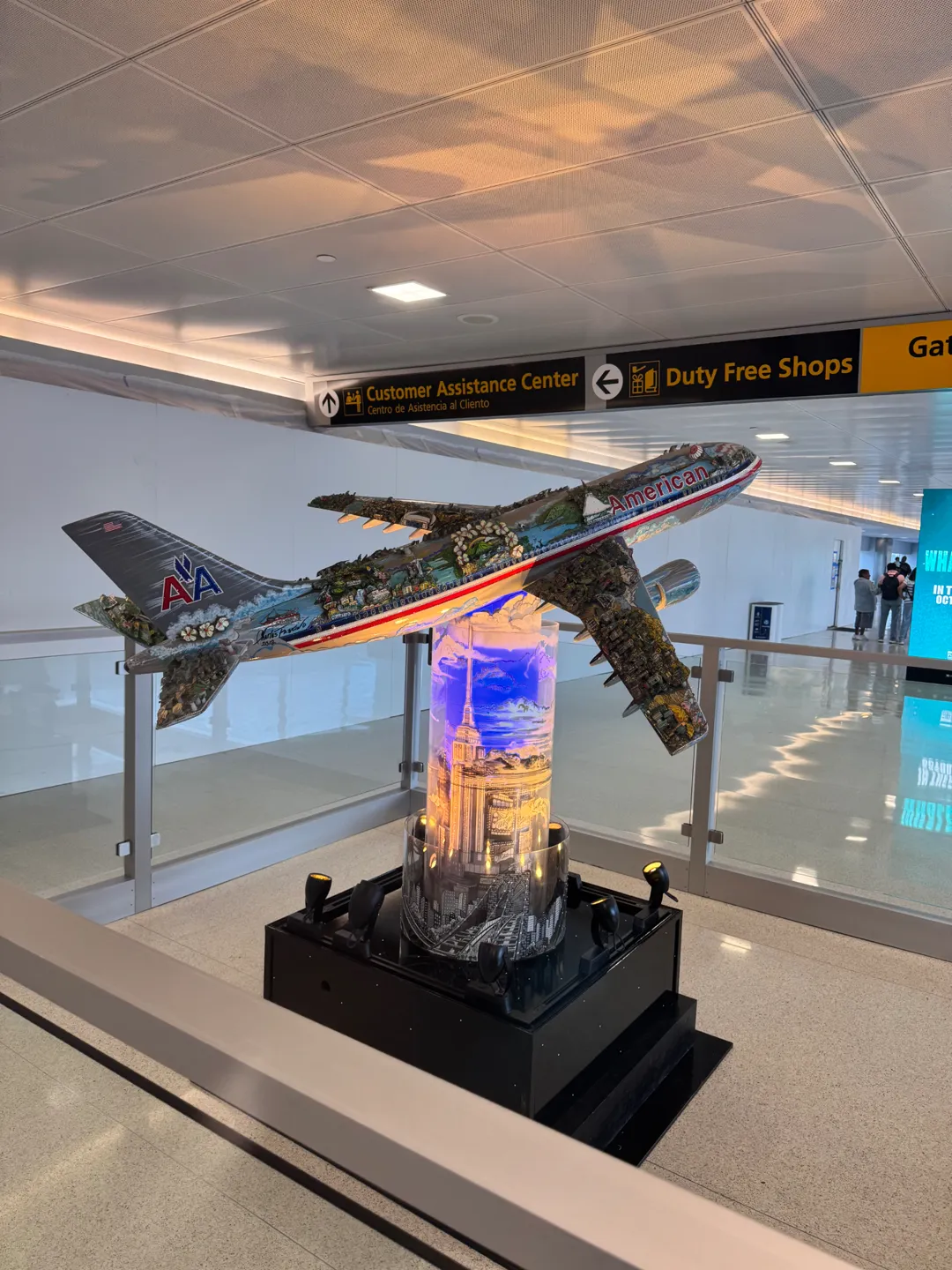
When I took this picture at the airport, I was originally thinking about how easy it had been to move between places. An 80- or 90-minute flight, and I could be in another state, hundreds of kilometres away.
Coming from Lebanon, where relatively short journeys can sometimes take far longer than expected, the contrast was difficult to ignore.
But the more I thought about it, the less this became an article about airplanes. It became an article about friction.
A successful e-commerce transaction looks digital. The customer taps a button. The payment is processed. A confirmation email appears. From that moment on, a very physical machine starts moving: warehouses, conveyors, trucks, airports, aircraft, sorting facilities, delivery drivers and roads.
More efficient movement can reduce friction. Less friction can make more transactions economically viable. More transactions create more volume. More volume can justify better infrastructure. And better infrastructure can make an enormous country feel surprisingly small.
The checkout happens online.
The real economy still has to move the box.